Get this guide as a tappable itinerary
Day-by-day plan, audio tours, and one-tap Google Maps — completely free.



Oaxaca Cultural Experiences: Cooking Classes, Workshops & Festivals
The stuff you'll remember long after you forget what hotel you stayed at. Real experiences, real prices, no hand-waving.
Oaxaca's culture is not a museum piece. It is not preserved behind glass or performed for tour groups on a schedule. It is a living, working, everyday thing — women grinding chocolate at 6 AM the same way their grandmothers did, weavers running backstrap looms while watching telenovelas, alebrijes painters finishing a single piece over the course of three weeks because that is how long it takes when you actually care about what you are making.
This matters because the cultural experiences available to visitors in Oaxaca are not simulations. When you take a cooking class, you are cooking real food with real cooks who will eat the same dishes for dinner tonight. When you visit an artisan workshop, you are walking into someone's actual workspace, not a demonstration center built for tourists. When you attend Guelaguetza, you are watching indigenous communities perform dances they have been performing for centuries — not a choreographed show designed to sell you souvenirs on the way out.
What follows is a specific, priced, opinionated guide to the cultural experiences worth your time and money in Oaxaca. Some of these cost nothing. Some cost $140 USD and are worth every peso. A few things that appear on every “top 10 experiences” list are not here because they are not that good. We will tell you which ones and why.
Cooking Classes
A cooking class in Oaxaca is not a team-building exercise with aprons. It is a full-day immersion into the food culture that defines this region — market walks at dawn, grinding chiles on a metate, making mole from scratch the way it has been made for hundreds of years. Every class below includes a guided market tour, hands-on cooking of multiple dishes, and you eat everything you make. These are the three we recommend, and each one offers something different.
Casa de los Sabores
The most well-rounded class in Oaxaca City. Starts at Mercado de Abastos where your instructor walks you through every aisle, explaining chiles, herbs, and chocolate. Back at the kitchen you cook four dishes: a mole (usually coloradito or amarillo depending on the day), tlayudas, a soup, and a seasonal side. The instructors are Oaxacan women who grew up cooking these dishes, not culinary school graduates performing ethnicity. Class size is capped at 8, so you actually get to cook, not just watch.
1,800 MXN ($100 USD)
5 hours
Book 2-3 days ahead
Seasons of My Heart (Rancho Aurora)
Susana Trilling's ranch outside the city, about 45 minutes by taxi, set in the Etla Valley with views of the mountains. This is the full-day, deep-dive option. You visit a local market in Etla (much less touristy than the city markets), then cook at the ranch using wood-fired clay ovens and traditional tools. Expect 5-6 dishes including a complex mole and handmade tortillas. It is more expensive and more remote, but if you want to understand Oaxacan food at a deeper level than ‘I took a class,’ this is it. Susana literally wrote the book — she has authored three cookbooks on Oaxacan cuisine. Book through Seasons of My Heart directly.
2,500 MXN ($140 USD)
Full day
Book 1 week ahead
Casa Crespo
The most intimate option. Run by a Oaxacan family out of their home kitchen, classes are capped at 4-6 people. The market visit is shorter but more personal — they take you to the vendors they actually buy from and introduce you by name. Back at the house you cook 3-4 dishes in a real family kitchen (not a purpose-built teaching space), and the recipes lean toward the everyday food Oaxacans actually eat at home rather than restaurant showpieces. If you want to feel like you are cooking with a family rather than attending a class, this is the one.
1,500 MXN ($85 USD)
4 hours
Book 1-2 days ahead
Artisan Workshops
The Valles Centrales surrounding Oaxaca City are home to Zapotec and Mixtec communities that have been producing crafts for centuries. What makes these villages remarkable is that the artisans are not recreating traditions for tourists — they are continuing a living practice. Every village listed below is reachable by colectivo from Oaxaca City for under 50 MXN each way. You do not need a guide or a tour company. Just show up, walk around, and ask to see workshops. Most families are happy to demonstrate their process.
Alebrijes in San Martín Tilcajete
The spiritual home of alebrijes — intricately carved and painted wooden spirit animals that have become the most recognizable Oaxacan craft worldwide. Entire families work together: men carve the copal wood into jaguars, dragons, and impossible hybrid creatures, while women paint them with microscopic dot patterns that can take weeks to finish. Walk into any taller on the main road and you will be shown the full process from raw wood to finished piece. The work is astonishing up close — many pieces sell for thousands of dollars in galleries abroad but cost a fraction here. Jacobo & María Ángeles is the most famous workshop, but smaller family operations along the village roads are equally impressive and far less crowded.
Free (village visit) / 500 MXN (workshop)
3-4 hours
Show up
Barro Negro in San Bartolo Coyotepec
The village that invented barro negro — Oaxaca's signature black pottery. The technique was perfected by Doña Rosa Real de Nieto in the 1950s, and her descendants still run the main workshop on the town square. The clay starts grey and turns jet black through a reduction firing process (oxygen-starved kiln, no glaze, no paint). You can watch potters shape pieces by hand on a rotating base (no potter's wheel — they spin the base with their feet), and the burnishing process that creates the metallic sheen is hard to look away from. Several workshops offer free demonstrations. Buy directly from the artisans — identical pieces sell for 3-4 times more in Oaxaca City shops.
Free demonstrations
2-3 hours
Show up
Textile Weaving in Teotitlán del Valle
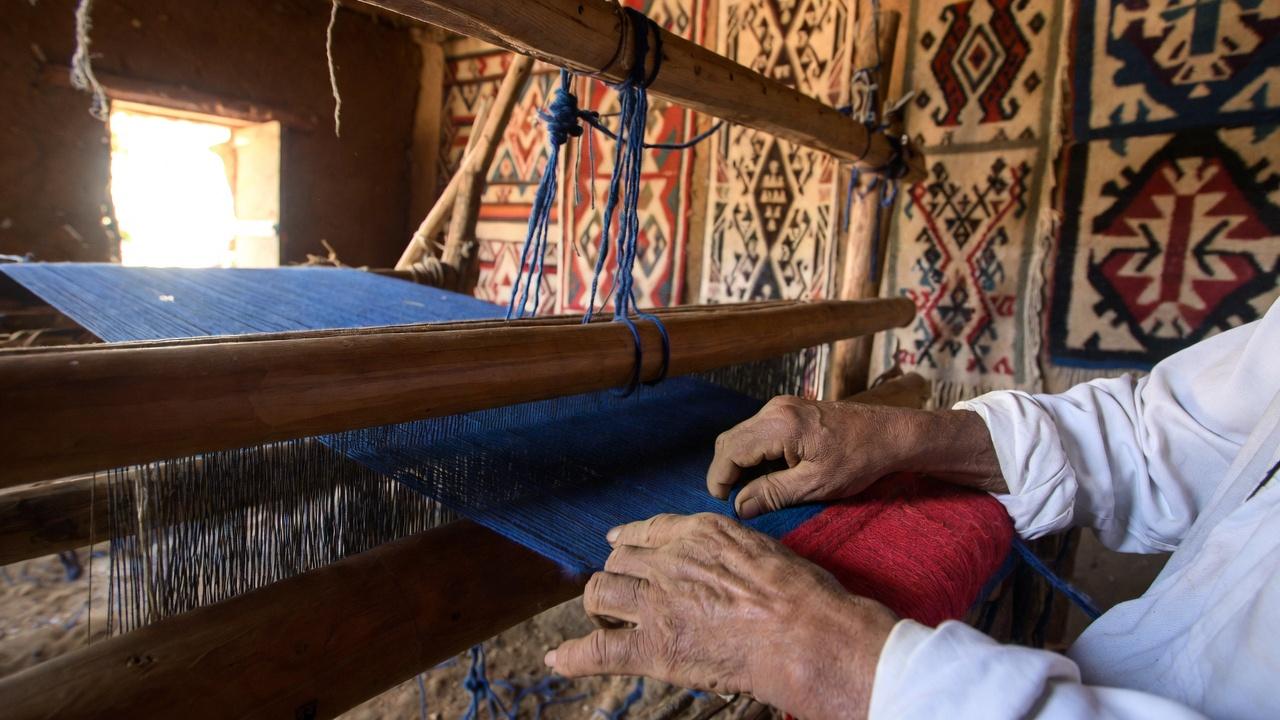
A Zapotec village that has been weaving textiles since before the Spanish arrived. The rugs and tapetes are made from wool dyed with natural pigments — cochineal insects for reds and pinks, indigo for blues, pomegranate for yellows, huizache bark for browns. Watching the dyeing process is as interesting as the weaving itself. Several cooperatives offer hands-on backstrap loom lessons where you weave your own small piece to take home. The community-run cooperatives pay artisans fairly and prices are transparent. This is the village where you will be most tempted to spend money, and you should — a handwoven rug from Teotitlán is a legitimate heirloom piece.
300-500 MXN (weaving lesson)
2-3 hours
Arrange at cooperative
Chocolate Making at Mayordomo
Not a village trip but a city experience worth including. Mayordomo is Oaxaca's most iconic chocolate brand, and their original location on Calle Mina offers a free walk-through of their grinding process. Watch cacao beans get roasted, ground with sugar and cinnamon on a stone metate, and turned into the paste that becomes Oaxaca's famous chocolate de agua. The whole factory smells like roasted cacao and warm cinnamon. It takes 30 minutes, there is no reservation, and you will leave with a bag of chocolate (because it is impossible not to). Their custom blends let you choose your sugar-to-cacao ratio — go for 70% cacao, 30% sugar if you want it the way Oaxacans drink it.
Free factory tour
30 min
Walk in
Festivals Worth Planning Around
Oaxaca has more festivals per capita than almost anywhere in Mexico. Some are worth rearranging your entire trip for. Others are nice if you happen to be in town but not worth flying in specifically. Here are the four that matter most, with honest assessments of what to expect.
Guelaguetza
The single biggest cultural event in Oaxaca and arguably the most important indigenous festival in Mexico. Delegations from all eight regions of the state converge on the city to perform traditional dances, music, and rituals in full ceremonial dress. The main performances happen at the Auditorio Guelaguetza on Cerro del Fortín, but the entire city transforms — parades (calendas) through the streets, free concerts in the Zócalo, mezcal tastings, food fairs, and spontaneous dancing in every neighborhood.
The event spans roughly two weeks, with the main performances on the two Mondays following July 16. Free seating (sections C and D) requires arriving by 6 AM. Paid sections (A and B) cost 300–600 MXN and are sold through the Oaxaca state tourism office weeks in advance. Even without tickets to the main event, the surrounding festivities are worth the trip.
Día de los Muertos
This is the real thing, not the Cancún resort version with face paint and margaritas. In Oaxaca, Día de los Muertos is still a deeply religious observance. Families build elaborate altars (ofrendas) for their dead, cemeteries are lit with thousands of candles, and the rituals have a solemnity that is profoundly moving even as a visitor. The main event is the vigil at the Panteón General on the night of November 1 — families picnic beside their loved ones' graves, mariachi bands play requests, and the candlelight stretches as far as you can see.
In the days leading up, the city is full of comparsas (costumed parades), marigold-covered altars in every shop and restaurant, and the smell of copal incense everywhere. The nearby village of Xoxocotlán has an especially dramatic cemetery vigil. This is the second most popular time to visit after Guelaguetza — book 6–8 weeks ahead.
Noche de Rábanos
Yes, it is a radish carving competition. Yes, it sounds absurd. And yes, it draws thousands of spectators who crowd the Zócalo to see what the carvers came up with. Every December 23, artisans compete in the Zócalo to create the most elaborate sculptures from giant radishes — nativity scenes, Guelaguetza dancers, historical tableaux, mythological creatures, all carved from radishes grown specifically for this event (they are enormous, the size of your forearm).
The tradition dates back to the colonial era when Spanish friars introduced radishes to the region and vendors carved them to attract buyers at the Christmas market. The event draws massive crowds and the line to see the displays can stretch for blocks. Get there by 5 PM for manageable lines. It is free, it takes about an hour to see everything, and it is uniquely, wonderfully Oaxacan.
Semana Santa
If you happen to be in Oaxaca during Holy Week, you will witness a city transformed by religious processions. On Good Friday, solemn parades wind through the Centro Histórico with floats carrying life-size statues of Christ, accompanied by incense, brass bands, and hundreds of participants in purple robes. The streets are carpeted with elaborate alfombras — sawdust tapestries colored with natural pigments and arranged into intricate patterns that take hours to create and are destroyed in minutes as the procession walks over them.
It is not worth flying to Oaxaca specifically for Semana Santa — you can see similar (and arguably more dramatic) processions in other Mexican and Latin American cities. But if you are already in town, clear your schedule on Good Friday afternoon and station yourself along Alcalá or around the Zócalo. The alfombras alone are worth seeing.
What This Actually Costs
Cultural experiences in Oaxaca range from completely free to moderately expensive, but nothing here will break the bank by international standards. Here is a realistic breakdown for a 4-5 day trip.
The Honest Take
Oaxaca is one of the few places in Mexico where “cultural experience” is not a euphemism for “tourist trap with traditional music playing in the background.” The artisans, cooks, and communities you interact with are doing what they have always done — you are being invited into their daily life, not a performance staged for your benefit.
That said, respect the invitation. Do not haggle artisans down to their last peso on pieces that took weeks to make. Do not photograph people without asking. Do not treat cemetery vigils as photo opportunities. Oaxaca is generous with its culture because people here are proud of it and want to share it. The best thing you can do is show up with curiosity, pay fair prices, and leave the selfie stick at the hotel.
Take a cooking class. Visit a village. Buy something directly from the person who made it. Sit in the Zócalo on a Sunday morning and listen to the band. These are the things you will remember about Oaxaca years from now — not the hotel, not the restaurant, not the Instagram spot. The moments where you were actually present in a culture that has been thriving for thousands of years and plans to keep doing so long after you leave.