Get this guide as a tappable itinerary
Day-by-day plan, audio tours, and one-tap Google Maps — completely free.



6 Day Trips from Oaxaca City, Ranked by a Repeat Visitor
Not every day trip from Oaxaca is worth your time. After six visits to the valley, here's what I'd actually do again — and what I'd skip.
Every Oaxaca blog post lists the same day trips in the same order and calls all of them “must-see.” They’re not. Some of these destinations will rewire your understanding of Mesoamerican history — places where Zapotec engineering and living craft traditions force you to recalibrate what you assumed about pre-Hispanic civilizations. Others are fine. Pleasant, even. But “pleasant” is not worth a four-hour round trip on a rutted mountain road when you could spend that time eating tlayudas at the Mercado de Abastos or watching a mezcal distillation in a backyard palenque.
This guide ranks six day trips from Oaxaca City on one criterion: is the experience worth the time and effort to get there? I give each destination an honest verdict — “worth it,” “it depends,” or “skip it” — along with real transport prices, colectivo terminal locations, and the exact amount of time you actually need. No affiliate links influencing the rankings. No tour-company partnerships. Just opinions from someone who has taken all of these trips multiple times.
The Oaxaca Valley at a Glance
Oaxaca City sits in a Y-shaped valley surrounded by the Sierra Madre del Sur. All six destinations fan out from the city center. Hover or tap a marker to see distances and travel times.
Distances are approximate, measured from Oaxaca City zócalo. Times reflect typical colectivo/taxi travel, not driving.
6 Destinations, Honestly Ranked
Listed in the order I’d recommend them to a friend with 4-5 days in Oaxaca. Your priorities may differ — a textile obsessive should put Teotitlán first, an archaeology nerd Monte Albán.
Monte Albán
Ancient Zapotec capital on a flattened mountaintop
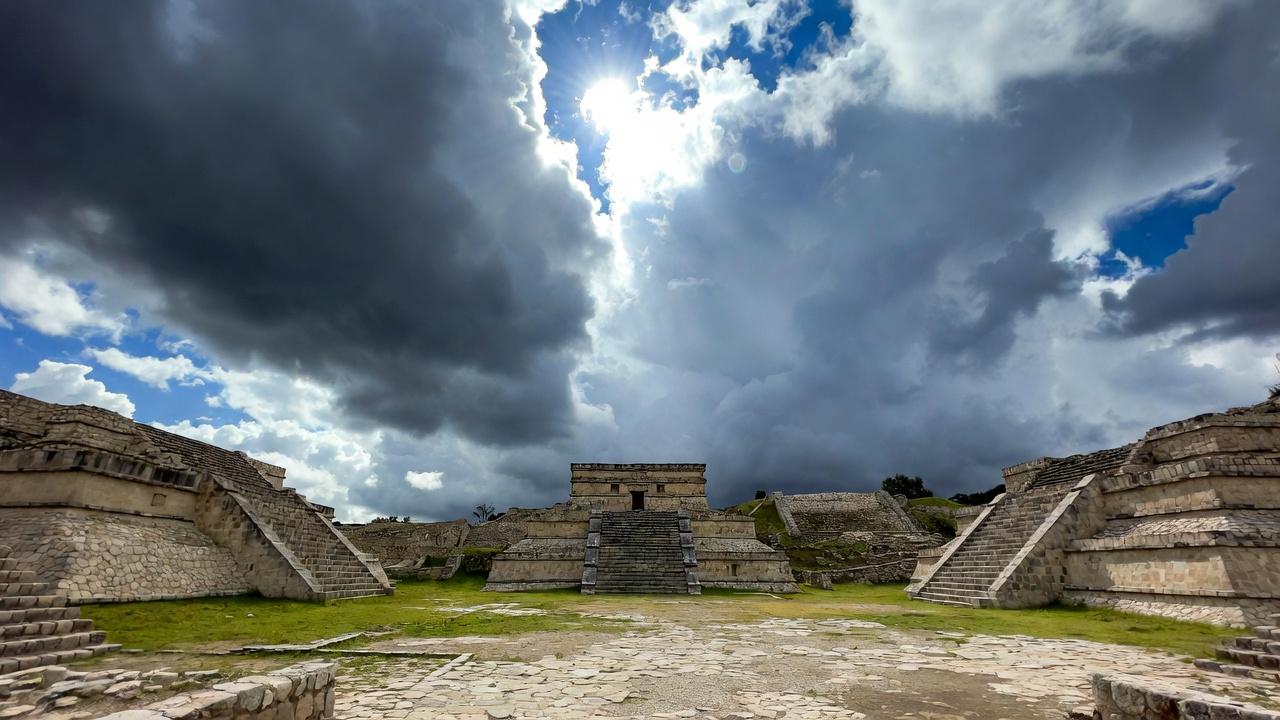
The Zapotecs leveled an entire mountain summit around 500 BCE and built a ceremonial center that dominated the valley for over a thousand years. The scale is staggering — the Grand Plaza alone is larger than two football fields. You'll see the Danzantes carvings (actually depictions of sacrificed captives), the astronomical Observatory, and panoramic views of the entire valley. The on-site museum is small but well-curated. Go early morning when fog lifts off the platforms — it's eerie and beautiful in a way photos don't capture. The colectivo from Calle Trujano takes 30 minutes and drops you at the parking lot. Buy your ticket at the booth, not from anyone approaching you in the lot.
The single most important archaeological site in the Oaxaca Valley and the oldest known city in the Oaxaca Valley, predating Teotihuacán's peak by centuries. Even if you're not into ruins, the mountain-top setting alone justifies the half-day. Go before 10am to beat tour buses.
Mitla
Zapotec-Mixtec mosaics that make Monte Albán look plain
If Monte Albán is about scale, Mitla is about precision. The geometric mosaic friezes on the Hall of Columns are made from thousands of individually carved stone pieces fitted together without mortar — a technique so precise that a knife blade can't fit between them. These aren't painted decorations or carvings; they're three-dimensional stone puzzles representing Zapotec cosmological patterns. The Spanish built a church directly on top of part of the site, which is its own kind of fascinating. The town of Mitla itself is worth 30 minutes of wandering — there's a good mezcal shop on the main road and a few textile vendors with reasonable prices. Colectivos leave from the second-class bus terminal on the Periférico.
46 km
2-3 hours
Colectivo 40 MXN
85 MXN entry
The mosaics at Mitla are arguably more impressive than anything at Monte Albán, and fewer tourists visit. The colectivo ride through the valley is beautiful. Combine it with El Tule on the way back for a solid half-day.
Teotitlán del Valle
Zapotec weaving village where every family has a loom
Teotitlán has been a weaving village since pre-Hispanic times — the Aztecs demanded textiles as tribute. Today, almost every household has a foot-pedal loom, and many families dye their wool with natural pigments: cochineal (deep crimson), indigo (blue), pomegranate (yellows), and huizache bark (browns). The best part isn't buying a rug (though you should — prices are 40-60% less than in Oaxaca City shops). It's watching the entire process: carding raw wool, spinning it, extracting cochineal from dried insects, mixing it with lime juice to shift the color, and then the hypnotic rhythm of the loom. Ask any workshop for a demonstration — they'll happily show you. The community museum is tiny but has a good collection of Zapotec artifacts found during church construction.
31 km
3-4 hours
Colectivo 25 MXN
Free
The best place in the Oaxaca Valley to understand textile traditions firsthand. You're buying directly from the families who make the pieces, at real prices. Workshop visits are typically free — you're not obligated to buy, though you'll want to.
El Tule
The widest tree on Earth, in a churchyard
El Árbol del Tule is a Montezuma cypress with a trunk circumference of 42 meters — wider than it is tall, wider than any tree on the planet. It's estimated to be between 1,500 and 3,000 years old. The tree sits in the churchyard of Santa María del Tule and is surrounded by a low iron fence. You walk around it, gape at the gnarled trunk (locals will point out shapes — a lion, a crocodile, an elephant), take some photos, and then you're done. There's a small market outside selling tejate, nieves, and fried grasshoppers. Honestly, the tree is impressive — the sheer mass of it is hard to comprehend in photos. But it's a 30-minute stop, not a destination. Never make a special trip just for this.
13 km
30-45 min
Colectivo 15 MXN
Free
It's the widest tree in the world and its 42-meter girth is hard to believe until you're standing next to it. But it's a photo stop, not a day trip. Only visit as a quick detour on the way to or from Mitla or Teotitlán. Never go just for this.
How to Combine Day Trips
Geography makes some combinations natural and others a waste of time. Here are the routes that actually work, tested across multiple trips.
The Eastern Valley Loop (Half Day)
Mitla + El Tule— Take an early colectivo toward Mitla (40 MXN). Ask to stop at El Tule first, spend 30 minutes with the tree, then flag down the next colectivo to continue to Mitla. Explore the ruins for 2 hours, grab lunch at one of the comedores on the main street (tlayuda for 60 MXN), then colectivo back. You’re home by 2pm. Total cost: about 180 MXN per person including entry and lunch.
Textiles + Mezcal (Full Morning to Afternoon)
Teotitlán del Valle + a mezcal palenque — Colectivo to Teotitlán (25 MXN), spend 2-3 hours visiting weaving workshops. On the return, ask the colectivo driver to drop you at the Matatlán turnoff — this is the “world capital of mezcal” and several palenques (small distilleries) accept walk-in visitors. Try Real Minero or Lalocura if they’re open, but any family-run palenque with a working tahona stone is worth 30 minutes. Colectivo back to Oaxaca. Total: around 120 MXN for transport plus whatever you spend on textiles and mezcal.
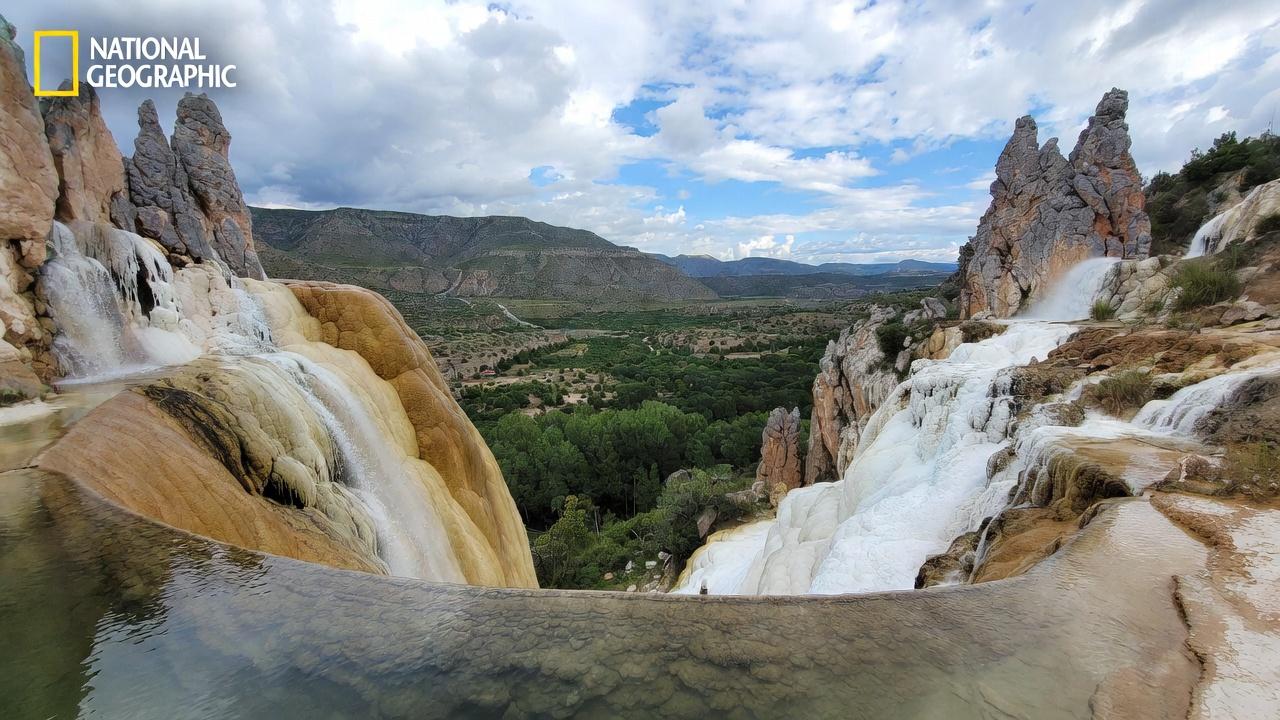
The Full Eastern Day (If You Must Do Hierve)
El Tule + Mitla + Hierve el Agua — This is the standard tour route and the only way Hierve el Agua makes logistical sense. Either book a tour (350-500 MXN) or hire a taxi for the day (negotiate 800-1,200 MXN for 2-4 passengers). You’ll leave around 8am, hit El Tule quickly, spend an hour at Mitla, then drive the rough road to Hierve el Agua, swim in the pools for an hour, and return by 5pm. It’s a long day but it works. I’d only recommend this if you have 5+ days in Oaxaca and have already done the things that matter more.
Craft Morning (Half Day)
San Bartolo Coyotepec + Monte Albán — These two are in roughly opposite directions but both close to the city. Start with San Bartolo by 9am (colectivo 15 MXN, 25 minutes south), spend 90 minutes with the potters, return to the city by 11am, grab a quick coffee, then take the Monte Albán colectivo for an afternoon visit when the light is beautiful on the platforms. This combo works because both are short, close, and deeply worthwhile.
Colectivo Cheat Sheet
Colectivos are shared minivans that run fixed routes. They’re how Oaxaqueños get around the valley. No apps, no schedules — just show up at the departure point and wait for one to fill up.
| Destination | Departs From | Price |
|---|---|---|
| Monte Albán | Calle Mina 518 (Hotel Rivera del Ángel) | 40 MXN |
| Mitla | Periférico / 2nd-class terminal | 40 MXN |
| Teotitlán | Periférico / 2nd-class terminal | 25 MXN |
| El Tule | Periférico / 2nd-class terminal | 15 MXN |
| San Bartolo | Periférico (south side) | 15 MXN |
| Hierve el Agua | Via tour/taxi from Mitla | 350+ MXN |